Will my bone marrow be harvested?
No. This is a treatment that uses allogeneic mesenchymal stem cells derived from donated umbilical cord blood.

OSANG STEM CELL CLINIC
DOMESTIC APPROVED CELL THERAPIES
Each treatment has different cell sources, approved diseases, and application methods.
Osang Neurosurgery provides information on the scope and standards of official approval before the name.
Cell + Evidence = CARE
Care For
Stem cell is one word, but the origin, approval target, and administration environment of the cells are different.You can accurately understand the treatment by looking at the three criteria together.
Approval Standard
Ministry of Food and Drug Safety product approval is a standard for the targets and methods set for each product. You must determine whether it is right for the patient by looking at the diagnosis and approval conditions together.
STEP 01 · CELL SOURCE
The manufacturing process and application method vary depending on whether the cells are your own or donated.
STEP 02 · APPROVED SCOPE
Even if the disease name is the same, detailed approval conditions such as severity, onset time, and testing criteria are checked together.
STEP 03 · ADMINISTRATION
The application environment for each treatment is different, such as surgical implantation, intravascular administration, and lesion site injection.
STEP 04 · CLINICAL SETTING
We check the standards of the medical environment, including specialized departments, facilities, and equipment required for each treatment.
Therapy Information
Applicability is not determined based on the disease name alone. The officially approved targets, application methods, and limitations of each product are summarized in easy-to-understand language.
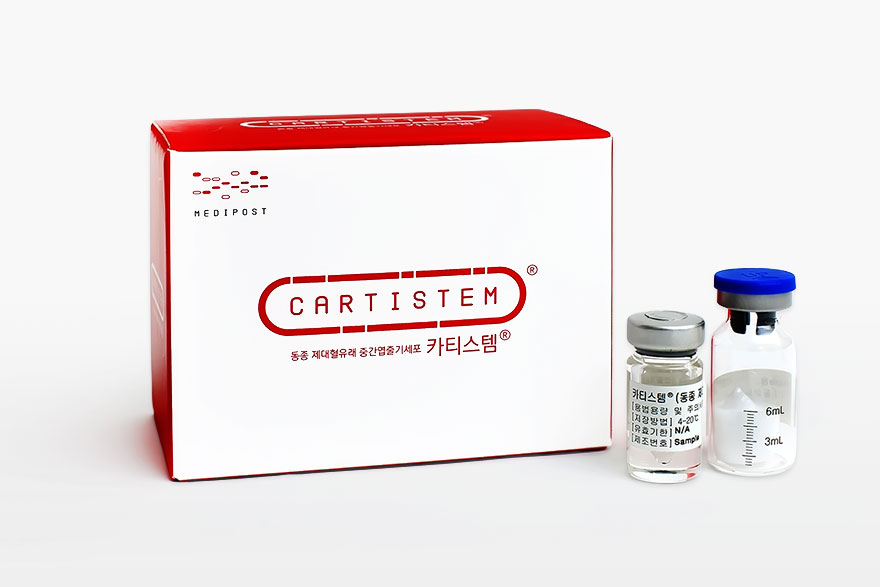
01 · CARTISTEM
This is an allogeneic cord blood-derived treatment for some patients whose knee cartilage is deeply damaged due to degenerative changes or repeated trauma.
APPROVED SCOPE
It is approved for the treatment of ICRS grade 4 cartilage defects in which the knee cartilage is deeply damaged down to the bone due to degenerative changes or repetitive trauma.
CHECK 01
CHECK 02
TREATMENT FLOW
The location and size of cartilage defects, degree of arthritis, and joint alignment are checked.
After anesthesia, the damaged area is checked through joint incision or arthroscopy.
Clean up damaged tissue and prepare the graft site according to the approved use.
Cartistem and hyaluronic acid are mixed and filled in cartilage defects.
Weight bearing and rehabilitation period are determined depending on the extent of surgery and patient condition.
LIMITATIONS & SAFETY
QUESTIONS & ANSWERS
No. This is a treatment that uses allogeneic mesenchymal stem cells derived from donated umbilical cord blood.
No. The damaged cartilage area is surgically prepared, a treatment agent is implanted, and a rehabilitation process is performed.
ICRS and K&L are different evaluation standards. Cartilage defects must be ICRS grade 4, but K&L grade 4, which is terminal arthritis on X-ray, is a contraindication to administration.
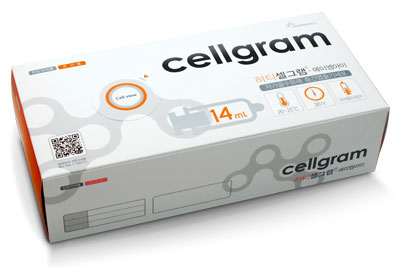
02 · HEARTICELLGRAM-AMI
It is an autologous bone marrow-derived treatment for selected patients with acute myocardial infarction who have undergone coronary angioplasty within a limited period of time.
APPROVED SCOPE
It is approved for the purpose of improving heart function in patients who undergo coronary angioplasty within a specified time after acute myocardial infarction and whose left ventricular ejection fraction is less than 40%.
CHECK 01
CHECK 02
TREATMENT FLOW
Blocked blood vessels are first reopened with coronary angioplasty.
Check the approval conditions, including the time of onset, procedure time, and left ventricular ejection fraction.
The treatment is manufactured by collecting cells from the patient's own bone marrow.
The treatment is divided and administered into the coronary artery using a balloon catheter.
After administration, coronary blood flow, heart function, and adverse reactions are checked.
LIMITATIONS & SAFETY
QUESTIONS & ANSWERS
No. This is a treatment applied to some patients who have already suffered an acute myocardial infarction and have had their blood vessels reopened within a set time.
No. It is administered into the coronary artery in an environment where cardiovascular intervention is possible.
No. Hearticellgram-AMI is eligible for approval for patients with acute myocardial infarction who meet all conditions.
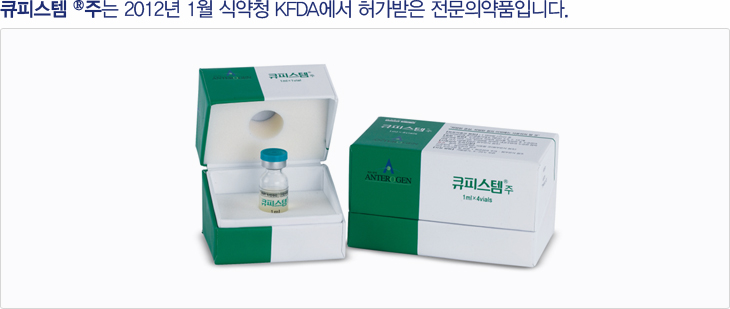
03 · CUPISTEM
It is an autologous cell therapy that injects the patient's own fat-derived cells into the fistula caused by Crohn's disease.
APPROVED SCOPE
It is approved for the treatment of fistulas caused by Crohn's disease. It is not a drug that treats all symptoms of Crohn's disease, but rather targets the fistula.
CHECK 01
CHECK 02
TREATMENT FLOW
The location and type of the fistula, the activity of Crohn's disease, and infection are checked.
After anesthesia, the patient's own fat tissue is collected.
Mesenchymal stem cells are separated from the collected fat and cultured and manufactured.
The abscess and granulation tissue are removed, and the inner opening of the fistula is cleaned.
Cell therapy is administered around the fistula and under the mucous membrane.
Check the fistula closure status and the presence of pain, bleeding, or infection.
LIMITATIONS & SAFETY
QUESTIONS & ANSWERS
No. It is a prescription drug made by isolating and culturing mesenchymal stem cells from harvested fat.
No. Applicable for approval are fistulas caused by Crohn's disease and existing Crohn's disease treatment and management are still required.
No. Since it is an autologous cell therapy product made from the patient's own cells, it can only be used by the patient.
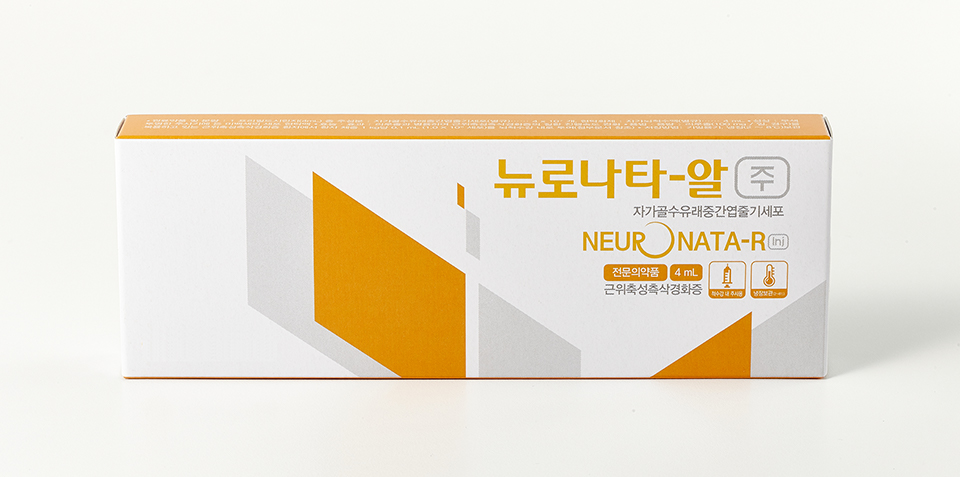
04 · NEURONATA-R
It is an autologous bone marrow-derived cell therapy for some patients with Lou Gehrig's disease that meets all current approval criteria.
APPROVED SCOPE
It is approved to slow the progression of some patients with amyotrophic lateral sclerosis (ALS) who are taking Riluzole together and whose rate of functional decline has been confirmed to be within the approved standard in repeated tests.
CHECK 01
CHECK 02
TREATMENT FLOW
The ALSFRS-R is measured repeatedly to calculate the actual rate of functional decline.
Check whether you are taking Riluzole, your overall condition, and whether you meet the conditions for official approval.
We manufacture cell therapy products by collecting raw materials from patients themselves.
A dose appropriate for body weight is administered through spinal tap.
Administer twice in total at 26-day intervals according to the approved dosage.
Monitor for acute adverse reactions at least one day after administration.
LIMITATIONS & SAFETY
QUESTIONS & ANSWERS
No. Repeated evaluations are required to calculate actual progress and meet all current official licensing criteria.
No. The approved goal is to slow the rate of functional decline in some patients who meet the conditions.
No. Neuronata-R is not an approved treatment for Parkinson's disease or cerebral infarction.
Evidence Standard
For the latest efficacy/effects, usage/dosage, contraindications, and adverse reactions, you must first check the latest approvals from the Ministry of Food and Drug Safety.
View the approval conditions for each product, including disease name, severity, and application method.
We provide guidance based on MFDS Drug Safety Korea and the manufacturer's official information.
At A Glance
Even if the stem cell therapy is the same, it differs in whether it is applied using own cells or donor cells, and in what area and method it is applied.
| cure | Cell-derived | Officially licensed | Application method |
|---|---|---|---|
| Cartistem | Mesenchymal stem cells derived from donated cord blood | knee cartilage defect | Surgical transplantation of cartilage defects |
| Hearticellgram-AMI | Mesenchymal stem cells derived from the patient's own bone marrow | Acute myocardial infarction that meets the criteria | Intracoronary administration |
| Cupistemju | Mesenchymal stem cells derived from the patient's own fat | Fistula caused by Crohn's disease | Topical administration at the fistula site |
| Neuronata-Alju | Mesenchymal stem cells derived from the patient's own bone marrow | ALS meets approval criteria | Intrathecal administration |