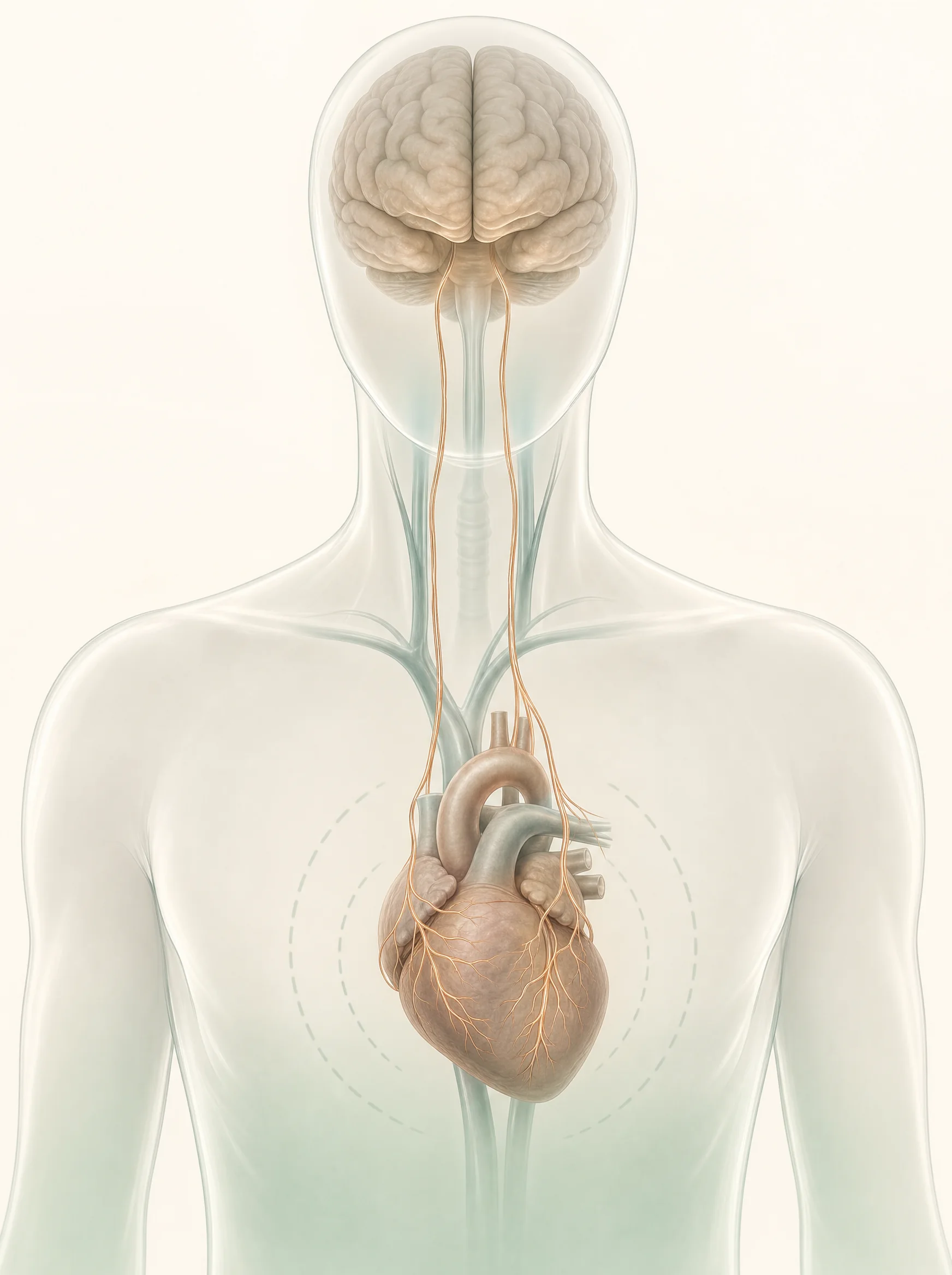
Sudden drop in blood pressure and heart rate, Blood flow to the brain is briefly reduced.
Vasovagal syncope is the most common form of neurally mediated syncope in which the vagus nerve becomes excessively activated, causing a sudden drop in heart rate and blood pressure, resulting in a temporary decrease in cerebral blood flow, resulting in loss of consciousness. It accounts for approximately 56-66% of all causes of syncope, and most have a benign course without any life-threatening effects.
Among all causes of fainting
56–66%
When is the first occurrence common?
10–30 years old
Prodromal symptoms preceded by
70–80%
VAGUSVAGUS NERVE RESPONSEOveractivity of the vagus nerve can simultaneously lower heart rate and blood pressure.
DEFINITION
What is vasovagal syncope?
Vasovagal syncope (VVS) is a representative form of neurally mediated syncope in which bradycardia and vasodilation occur simultaneously due to excessive activity of the vagus nerve, resulting in a temporary decrease in cerebral blood flow and loss of consciousness. Syncope is a type of transient loss of consciousness caused by global cerebral hypoperfusion and is characterized by complete spontaneous recovery. VVS is the most common type of syncope, accounting for approximately 56-66% of all causes of syncope, with approximately 40% of the general population experiencing syncope at least once in their lifetime. The most common first occurrence is between the ages of 10 and 30, and the incidence is slightly higher in women than in men. VVS itself is a benign disease that is not life-threatening, but repeated occurrences can be accompanied by a risk of trauma and decreased quality of life.
It is the most common form of neurally mediated syncope, in which bradycardia and a drop in blood pressure occur simultaneously due to overactivity of the vagus nerve, resulting in a temporary decrease in cerebral blood flow and loss of consciousness.
SYMPTOMS
What symptoms do you experience?
In vasovagal syncope, warning symptoms (prodromal symptoms) appear first before syncope, and most people recover spontaneously within a few seconds to a minute after loss of consciousness. Check out the representative symptoms at each stage.
01BEFORE
Prodromal symptoms (warning symptoms before fainting)
It occurs seconds to minutes before the onset of syncope and precedes it in approximately 70-80% of patients. Typical symptoms include lightheadedness, blurred or dark vision, nausea, cold sweat (sweating), pale face, tinnitus or dulled hearing, numbness in the extremities, general weakness, and yawning. Sitting or lying down at this point can help prevent fainting.
02SYNCOPE
Loss of consciousness (syncope)
When cerebral blood flow decreases below a critical value, muscle tone is lost and collapse occurs, with most recovering naturally within a few seconds to a minute. It may be accompanied by brief tonic or myoclonic jerks, but this is a secondary phenomenon caused by cerebral hypoperfusion and is essentially different from epilepsy.
03RESPONSE
Bradycardia and transient cardiac arrest
During syncope, a rapid decrease in heart rate or transient cardiac arrest (asystole) lasting longer than 3 seconds may be observed. During a standing incline table examination, a cardiac arrest lasting more than 3 seconds is recorded in approximately 40-50% of patients.
04RECOVERY
convalescent symptoms
When you return to a supine position, cerebral blood flow is restored and consciousness returns. After recovery, overall fatigue, headache, nausea, etc. may last from a few minutes to several hours, and if you get up too quickly, you may faint again, so you need plenty of rest.
CAUSES
Why does it happen?
Vasovagal syncope occurs when, in addition to the core mechanism of overactive vagal reflexes, various triggers such as standing, emotions, and the body overlap.
01
Bezold-Jarish reflex (key mechanism)
Prolonged standing causes decreased venous return and reduced ventricular filling. As the relatively empty ventricle contracts excessively, the mechanoreceptors on the ventricular wall are stimulated, and when this signal is transmitted to the vasomotor center of the medulla through the vagal afferent fibers, the sympathetic nerve is inhibited and the parasympathetic nerve (vagus nerve) is overactivated. As a result, bradycardia and peripheral vasodilation occur simultaneously, causing a rapid drop in blood pressure.
02
Triggers related to standing
Typical examples include standing for long periods of time, standing in a hot environment, crowded spaces, and prolonged immobility during school assemblies or military parades.
03
Emotion/pain-related triggers
Triggers include blood sampling, injections, witnessing surgery, extreme pain, fear, and anxiety. Fainting during blood draw is a typical case of VVS.
04
physical triggers
Dehydration, excessive sweating, after drinking too much, fasting for a long time, lack of sleep, overwork, etc. Fainting due to vasodilation after a hot bath or sauna also occurs through the VVS mechanism.
05
Situational syncope and carotid sinus hypersensitivity
Situational syncope triggered by certain movements, such as urinating, defecating, coughing, or swallowing, is also included in the broad category of neuromediated syncope. Carotid sinus hypersensitivity occurs when pressure is applied to the neck and is more common in older men.
DIAGNOSIS
How is it diagnosed?
In diagnosing vasovagal syncope, a detailed history is most important, and the tilt table test is a standard diagnostic tool. A cardiac examination and autonomic function test (HRV) are performed together to differentiate cardiogenic syncope.
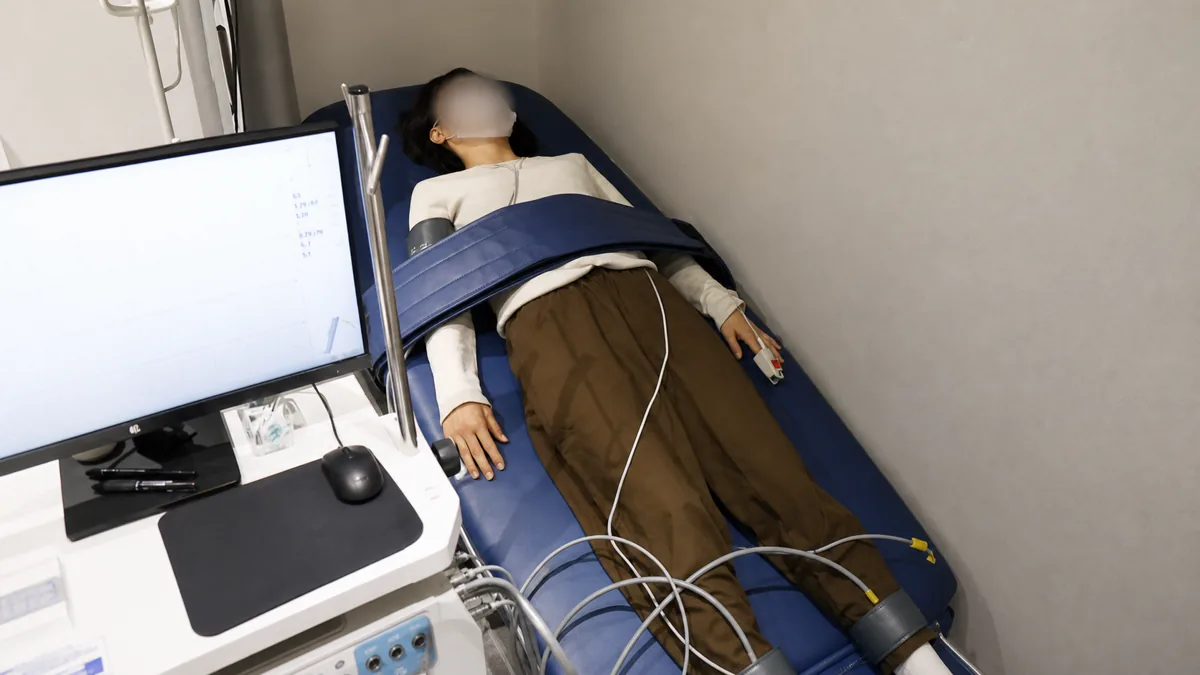
STANDARD TESTStanding incline table examination
When diagnosing VVS, taking the medical history is most important. Tilt table testis a standard diagnostic tool. During the history taking, typical triggers (prolonged standing, pain, heat, emotional stress, etc.), presence of prodromal symptoms, position at onset of syncope, witness statements, duration, presence or absence of convulsions, status after recovery, family history, history of heart disease, and medication history are systematically checked. The 2018 European Society of Cardiology (ESC) guidelines state that typical VVS can be diagnosed based on history alone if typical precipitating factors and prodromes are present, organic heart disease is excluded, and there are no neurological abnormalities.
The standing incline table test involves continuously measuring changes in blood pressure and heart rate by having the patient lie down on an examination table with a seat belt and tilting it at an angle of 60 to 70 degrees for 20 to 45 minutes. If syncope is reproduced and a drop in blood pressure and bradycardia are confirmed, the patient is judged positive. If there is no response to the basic test, a drug challenge test is performed using sublingual nitroglycerin or intravenous isoproterenol. The sensitivity of this test is approximately 61-69% and specificity is approximately 93%, and reproducibility is not perfect, so a negative result does not exclude VVS.
01standard inspection
Standing incline table examination
The patient lying on the examination table is tilted at an angle of 60 to 70 degrees for 20 to 45 minutes to continuously measure changes in blood pressure and heart rate. The test is positive if syncope is reproduced and a drop in blood pressure and bradycardia are noted. Sensitivity about 61-69%, specificity about 93%.
02heart differentiation
ECG, echocardiogram, Holter
To differentiate between cardiogenic syncope such as arrhythmia, structural heart disease, and aortic stenosis, 12-lead electrocardiogram, echocardiography, and 24-hour electrocardiogram monitoring (Holter) are performed.
03Autonomic nervous system evaluation
Heart rate variability (HRV) test
Heart rate variability (HRV) testing can be performed in parallel to quantitatively evaluate autonomic function. It is also differentiated from epilepsy, orthostatic hypotension, carotid sinus hypersensitivity, and psychogenic pseudosyncope.
Are you curious about the exact cause?Start with a diagnosis of dysautonomia
Vasovagal syncope is mostly controlled with non-pharmacological treatments such as patient education, lifestyle management, and physical counterpressure. For repetitive cardiac suppression type, drug or pacemaker insertion is considered step by step.
01
Patient education and trigger avoidance
Explaining that VVS is a benign, non-life-threatening condition is the starting point for treatment, and this education alone reduces anxiety and reduces recurrence rates. We guide you to identify and avoid individual triggers (standing for long periods of time, hot environments, dehydration, excessive drinking, etc.).
02
Physical counterpressure (primary treatment, ESC Class I recommended)
Isometric muscle contraction movements performed when prodromal symptoms are felt include crossing the legs and straining, pulling the arms with clasped hands, and squatting. It significantly reduced recurrence rates in randomized controlled trials, and is recommended as Class I for patients with prodromal symptoms in the 2018 ESC guidelines.
03
Water and salt intake
Consumption of 2-3 liters of fluid and 6-10 g of salt per day is recommended to increase circulating blood volume and improve venous return when standing. A quick drink of 500 mL of water (water bolus) when waking up in the morning also temporarily increases blood pressure.
04
Stand training (tilt training)
Gradually strengthen your autonomic tolerance to standing by practicing standing with your back against a wall, twice a day, for 20 to 30 minutes each time. There are reports that if performed consistently, the recurrence rate is reduced by about 40-50%.
05
medication
Consider in recurrent VVS not controlled with non-pharmacological treatment. Midodrine (alpha-1 agonist) maintains blood pressure by constricting peripheral blood vessels, and fludrocortisone (mineralocorticoid) increases blood volume through sodium and water retention. Beta-blockers (metoprolol) did not show a significant effect compared to placebo in the POST study, but a possible effect was reported in patients over 42 years of age.
06
pacemaker insertion
Considered in cardiosuppressive VVS unresponsive to medical treatment and documented cardiac arrest. The ESC guidelines recommend dual atrioventricular pacemakers as Class IIa in patients over 40 years of age, with recurrent syncope, and with documented symptomatic cardiac arrest lasting more than 3 seconds on an implantable loop recorder.
We have collected the most frequently asked questions from patients about vasovagal syncope.
Q1What is vasovagal syncope?
Vasovagal syncope is a phenomenon in which the vagus nerve is suddenly excessively activated, causing both heart rate and blood pressure to drop, resulting in temporary loss of consciousness. It is the most common cause of fainting and can occur even in healthy people. In most cases, it has a benign course without any life-threatening effects, but if it recurs, the quality of life can significantly decrease, so accurate diagnosis and management are necessary.
Q2Is it dangerous to have repeated fainting?
Vasovagal syncope itself is not a structural abnormality of the heart and is therefore not life-threatening. However, if you faint and fall, head trauma or fractures can occur, and if you fall while driving or from a high place, it can lead to a serious accident. Additionally, repeated fainting causes psychological anxiety and social withdrawal. If fainting occurs more than twice, be sure to seek medical attention.
Q3What are the signs before fainting?
In most cases of vasovagal syncope, a prodrome first appears. Symptoms such as darkening or blurring in front of the eyes, dizziness, nausea, cold sweat, pale face, and a feeling of ear fullness may precede the symptoms for a few seconds to several minutes. If you feel these prodromal symptoms, immediately sit or lie down and raise your legs to prevent fainting. Training to recognize prodromal symptoms is very helpful in preventing recurrence.
Q4How is the standing tilt table examination performed?
The tilt table test is a standard test to determine the cause of syncope. While lying down on an examination table with a seat belt and tilted at an angle of 60 to 70 degrees, blood pressure and heart rate are continuously monitored for 20 to 45 minutes. If syncope is repeated during the test and a drop in blood pressure and bradycardia are confirmed, vasovagal syncope is diagnosed. The examination process is carried out safely, and even if fainting occurs, you can rest assured that you will immediately lie down on the examination table and recover.
Q5How is vasovagal syncope treated?
The most basic thing is to avoid triggers (standing for long periods of time, dehydration, heat, overwork, etc.). Sufficient water intake of 2 to 3 liters per day and appropriate salt supplementation are recommended. When you feel prodromal symptoms, you can prevent fainting by performing physical counter-pressure techniques such as crossing your legs and pulling your arms. Many patients are able to control their symptoms with these non-drug treatments alone, but if the condition recurs, drug treatment is considered. We recommend that you consult with a specialist to develop a management plan that is right for you.
Q6How should people around me help me when I faint?
If the patient falls, first lay them down in a safe place and raise their legs higher than their heart. Loosen any tight clothing (tie, belt, etc.) and turn your head to the side to open the airway. Vasovagal syncope usually resolves spontaneously within 1 to 2 minutes. If you do not regain consciousness for more than 5 minutes or are accompanied by convulsions, seek help from an emergency medical facility. Please instruct the patient to lie down for at least 10 minutes immediately after recovering from fainting, rather than getting up immediately.
CONSULTATION
Do you suspect vasovagal syncope?
If fainting occurs even once, specialist consultation is required to determine the cause. Gangnam Osang Neurosurgery Autonomic Nerve Clinic provides accurate examination and customized management.
OSANG AI AssistantCounseling assistant · On standby
Hello. This is the OSANG AI Assistant for OSANG Neurosurgery. Please feel free to ask any questions you have about dysautonomia, testing, and treatment information. 656 Nonhyeon-ro, Gangnam-gu, Seoul 1599-5453